The mud cloth : The Art of a Sacred Fabric, Imbued with Earth and Time

L'âme du Bogolan - Studio Matongé
The term mud cloth comes from the Bambara word "bogo," which means clay, and "lan," to apply.
Each piece of mud cloth is the result of meticulous and ancestral know-how, consisting of hand-assembling several strips of white cotton. These strips are then softened and immersed in vats containing fermented mud and natural dyes of plant or organic origin, without any chemicals.

The process begins with the harvesting of Siiga leaves (in the Moré language) or ngálama (in Bambara), also known by the scientific name Anogeissus leiocarpus. The leaves are dried, pounded, and then infused in water at room temperature for 24 hours to extract a juice rich in iron, which gives it a pale yellow hue.

The raw cotton piece is then immersed in this infusion.This bath is renewed up to three times to achieve a deep and uniform yellow color, before the fabric is dried in the sun.

The next step consists of fermenting iron-rich clay, mixed with millet bran, in an earthen vat buried for seven days. This fermented clay is then hand-applied to the fabric, using sticks and/or stencils to create patterns. Each design is a personal expression of the artisan, often inspired by regional or family symbols, giving the mud cloth a unique and deeply cultural meaning.
This step leaves a strong odor on the mud cloth. It is also from this step that the fabric gets its name.

Once the shapes are drawn with the fermented clay, a natural chemical reaction allows the coloration of all areas touched by the clay (the shades depend on the ingredients added to the clay: ash, dyes, etc.).When the clay is dry, the fabric is thoroughly washed with soapy water, hence the name "mudcloth" (mud fabric used by Anglo-Saxons), to remove the fermented clay and its strong odor.

When the clay dries, a natural chemical reaction permanently impregnates the fabric where the clay has been applied. The shades vary depending on the ingredients added—ash, plants, or other natural elements—and give the fabric an inimitable chromatic richness. Once the patterns are set, the fabric is carefully washed to remove the clay and its characteristic odors, purifying it while revealing its iconic patterns.

Each piece of mud cloth is imbued with the energy of the earth and the artisan's hand. This sacred fabric is traditionally worn as protection, a shield of vital energy for the one it envelops.More than just a textile, the mud cloth is the embodiment of a story, a land, and a timeless art.

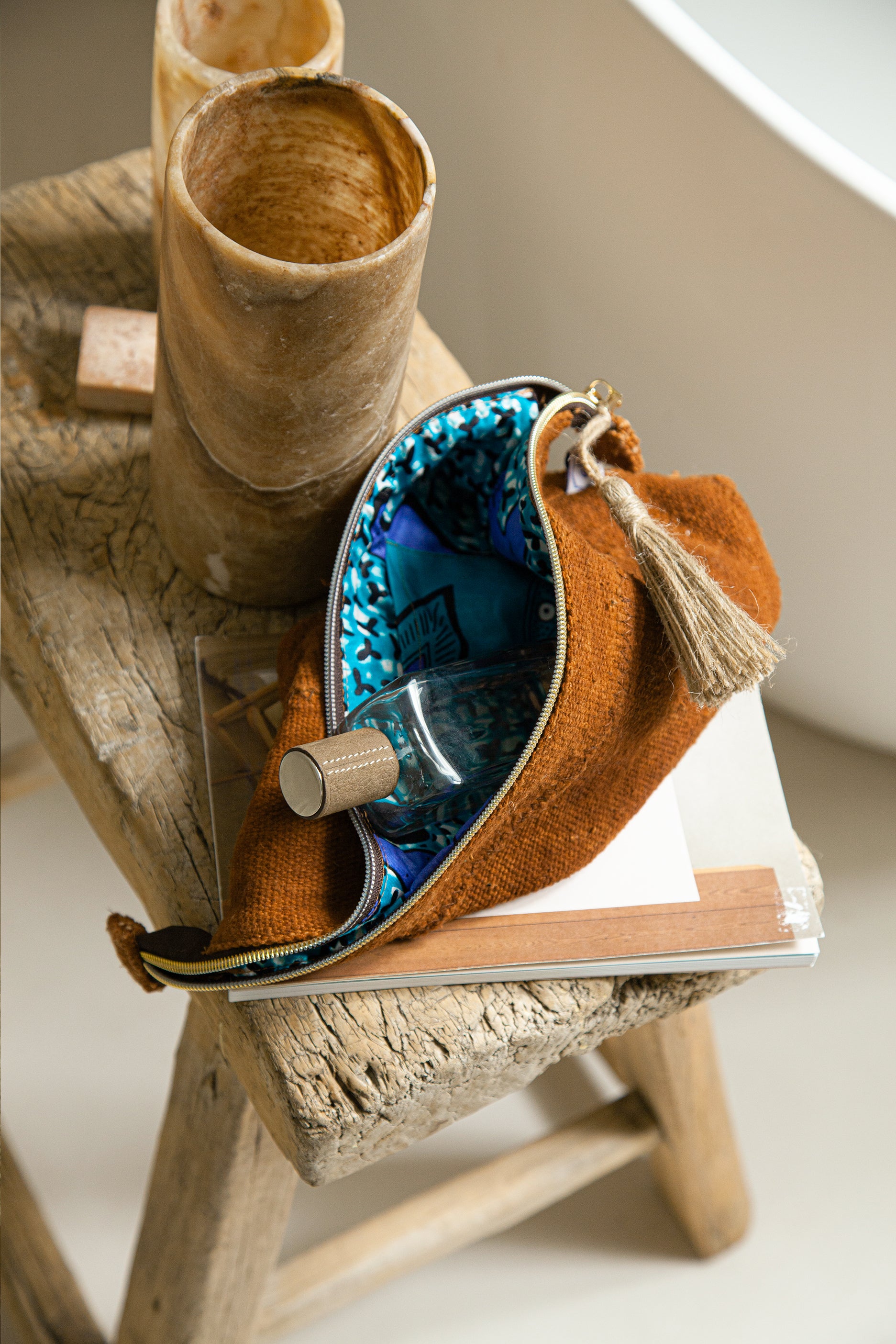
GIZA bogolan cushion cover FEMI-ARDHI bogolan throw DUNI-GORE toiletry bag in bogolan WEX white mudcloth fabric wall circle KEUR ochre bogolan cushion cover

mud cloth from Mali: handcrafted textiles for the home

Explore the collection

INSPIRATIONS - The Studio Matongé Blog

Koko Dunda: the artisanal textile from Burkina Faso with unique patterns

Born in Bobo-Dioulasso, Burkina Faso, Koko Dunda is...

Koko Dunda: a Burkinabe textile with patterns impossible to reproduce Some textiles immediately tell a story. The Koko Dunda, born...

Read More
The GOTS label: what you need to know about certified organic cotton

Understanding the material, beyond the labels.The...

In textiles, the term organic cotton is often used without a clear framework.The GOTS...

Read More
🎭 Win a VIP backstage tour of the Théâtre de la Monnaie with Studio Matongé

On Sunday, November 16,...

Sunday, November 16, 2025 — Special...

Read More